behavior: The way something, often a person or other organism, acts towards others, or conducts itself.
birds: Warm-blooded animals with wings that first showed up during the time of the dinosaurs. Birds are jacketed in feathers and produce young from the eggs they deposit in some sort of nest. Most birds fly, but throughout history there have been the occasional species that don’t.
carcass: The body of a dead animal.
environment: The sum of all of the things that exist around some organism or the process and the condition those things create. Environment may refer to the weather and ecosystem in which some animal lives, or, perhaps, the temperature and humidity (or even the placement of things in the vicinity of an item of interest).
family: A taxonomic group consisting of at least one genus of organisms.
livestock: Animals raised for meat or dairy products, including cattle, sheep, goats, pigs, chickens and geese. In some cases, farmed insects are referred to as mini-livestock.
mammal: An animal distinguished by possessing hair or fur, the secretion of milk by females for the feeding of their young, and (typically) the bearing of live young. They also are warm-blooded (or endothermic).
molt: (v.) To cast or shed skin, exoskeleton or feathers, which will be replaced with new. (n.) The act of molting, or the thing that is dropped during molting.
predator: (adjective: predatory) A creature that preys on other animals for most or all of its food.
subtropics: A geographic region that reaches to the beginning of the temperate climate zone (around 40° North and 40° South latitudes) from the edges of tropics, that band of hot climate spanning the outer belly of the planet. The tropics reach out to the Tropic of Cancer (around 23.5° north latitude) and Tropic of Capricorn (around 23.5° south latitude). The subtropics tend to be reliably warmer than temperate climates, but may experience brief periods of frost that would be unexpected in the true tropics.
temperate: In geography, areas that are cooler than the tropics but warmer than polar regions.
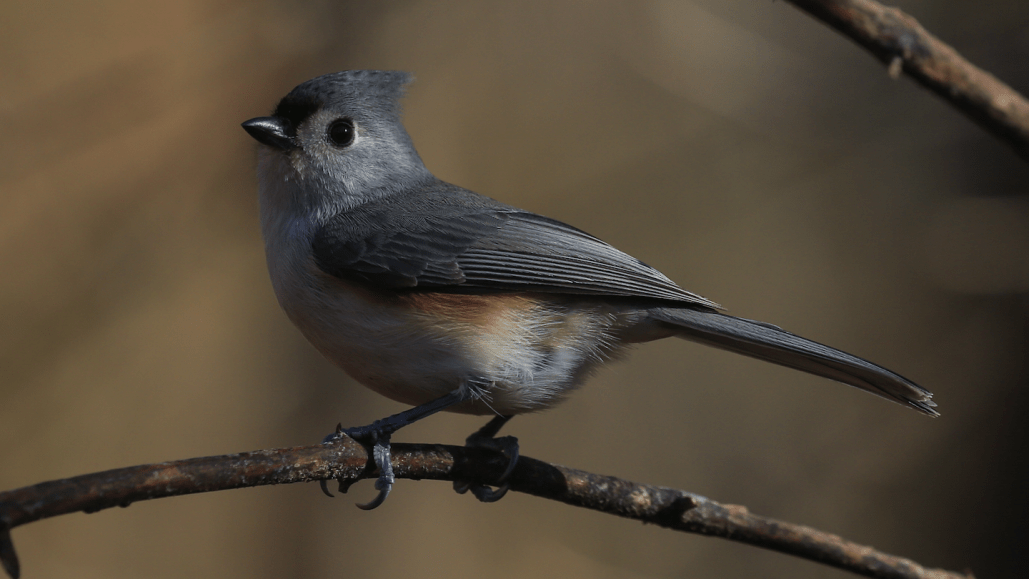
titmouse: A group of birds related to chickadees. They eat seeds and insects.
tropics: The region near Earth’s equator. Temperatures here are generally warm to hot, year-round.