Liquid from African tulip trees may protect honeybees from pests
Teen researchers report finding a natural solution to keep bees safe from threatening ants
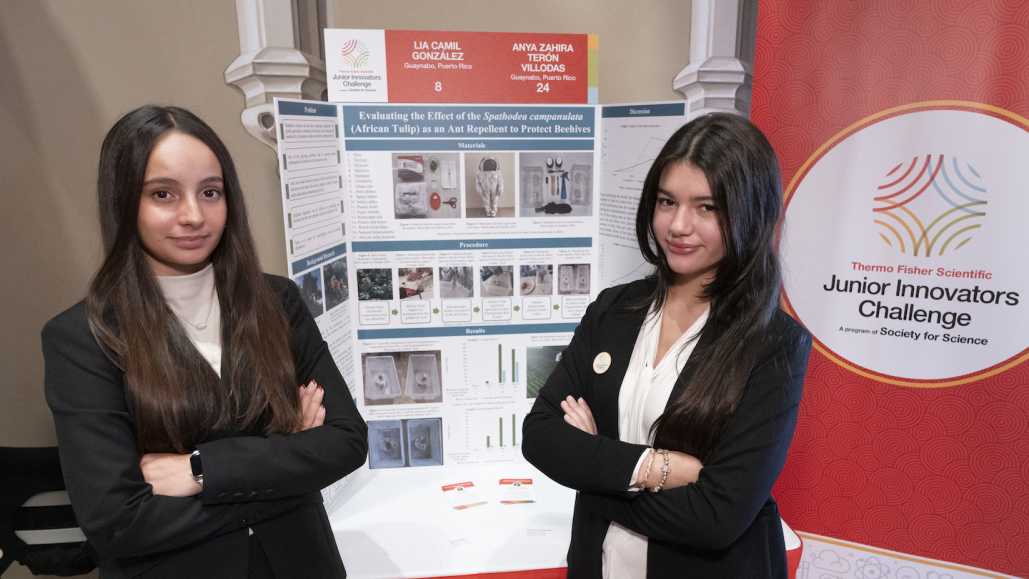
Lia González (left) and Anya Terón Villodas (right) teamed up to find a way to protect honeybees.
Society for Science
Anya Terón Villodas and Lia González are childhood friends turned science partners. The idea for their project came from Anya’s sister, who had done a science-fair project involving honeybees. Through that, Anya and Lia, both 14, learned about the threats these bees face from pests — such as ants that invade bees hives to steal their food. The pair wanted to find a way to help.
They had read that the liquid from the buds of African tulip trees may work as a natural insect repellent. To mimic beehives, the young researchers built two boxes filled with honeycombs and left them outdoors. Each box had small holes that would let insects get in. They sprayed one box with liquid from African tulip trees. They left the other box untreated.
After four hours, 183 living ants had invaded the unsprayed box. The box sprayed with the tree liquid, in contrast, contained 91 ants — all dead.
The African tulip tree is an invasive species in Puerto Rico, where Lia and Anya live. Their findings suggest a new way to protect hives threatened by thieving ants.
Anya and Lia did this work as eighth graders at Colegio Rosa-Bell in Guaynabo, P.R. Anya hopes to one day become a chemist who designs skincare products. Lia wants to be a doctor. Their research earned them finalist spots this October in the 2025 Thermo Fisher Scientific Junior Innovators Challenge. This program is run by Society for Science, which also publishes Science News Explores.
Here, Lia and Anya share their research experiences and advice.
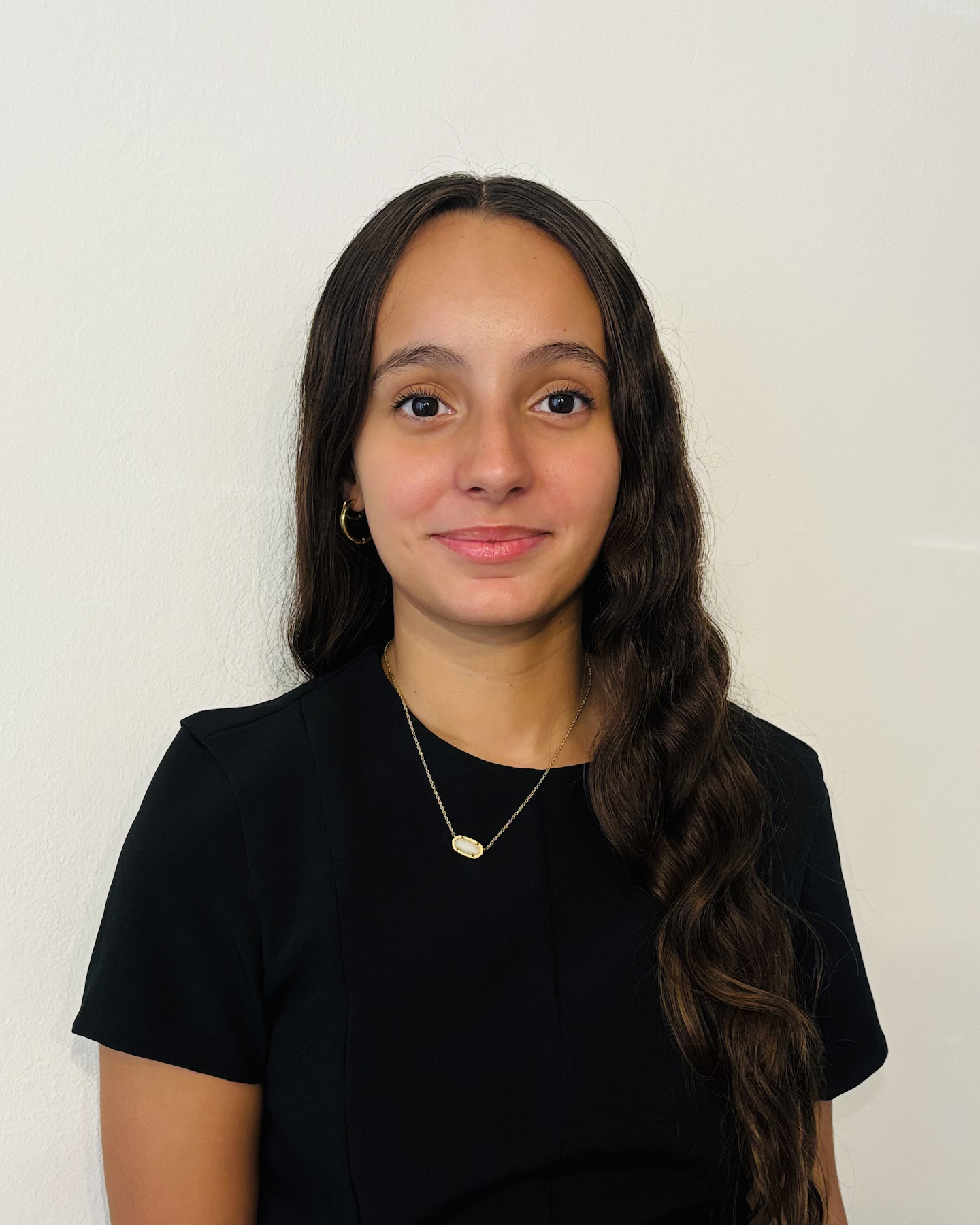
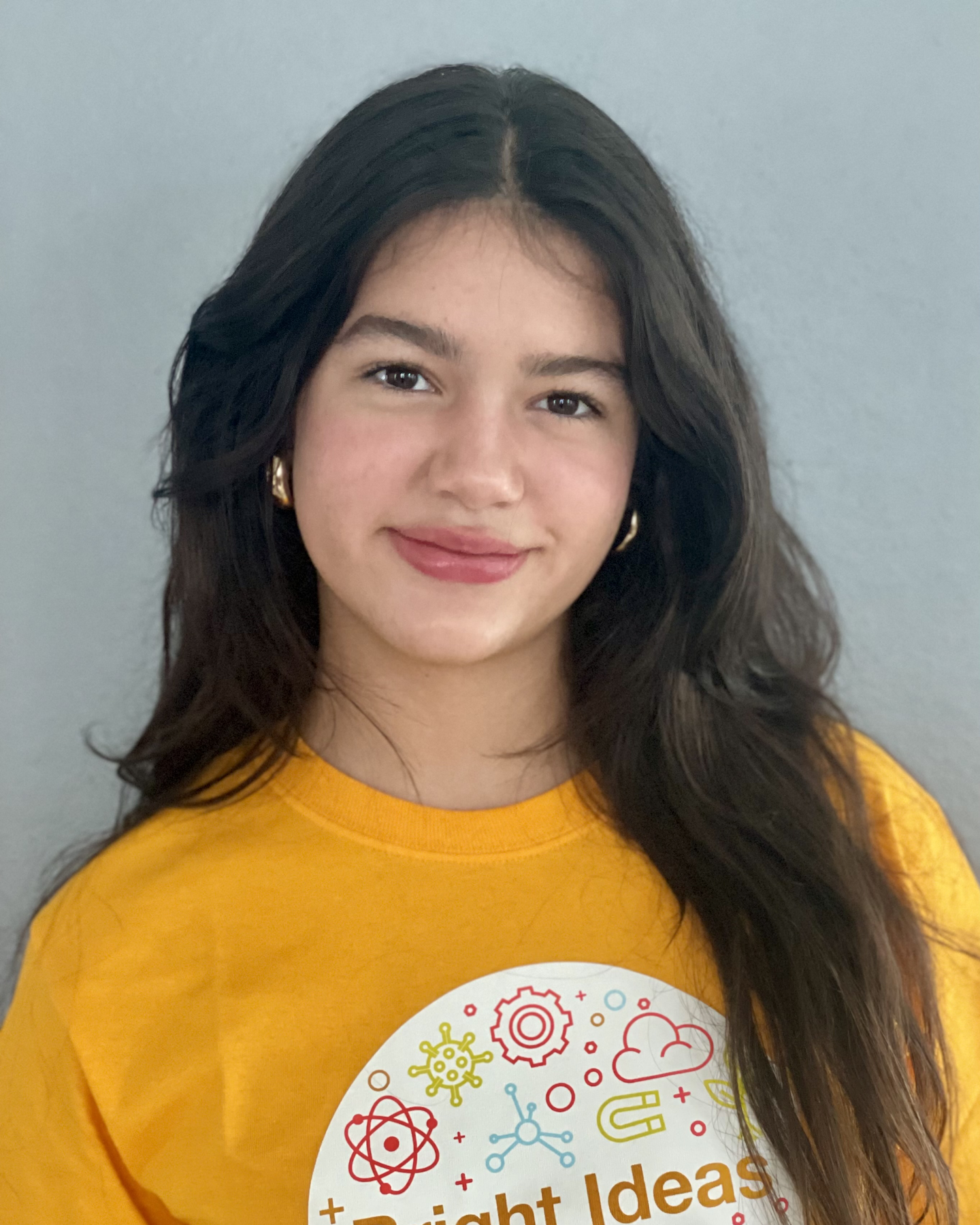
Lia González (left) and Anya Terón Villodas (right) found that liquid from the African tulip tree could help ward off threatening ants from honeybee hives.
Any advice for picking a research partner?
“Pick someone you’re actually compatible with and you know how they work,” Anya says. She, for instance, loves to talk and brings a lot of enthusiasm to discussing ideas.
Lia is more straightforward and keeps them on topic. Those differences create great chemistry, rather than friction, because they care about each other. “Make sure that the person you’re picking is someone you get along with,” Lia advises.
Did anything about the project surprise you?
Lia and Anya only set out to test whether ants would enter a repellent-sprayed model hive. They were delighted to see bees moving into the box sprayed with the ant repellent. “It was actually an amazing encounter,” Anya says. “We now for sure know that the African tulip liquid — which is our exterminator for ants — does not affect at all the bees.” That should mean it’s safe to use on hives.
What was the most challenging part of the project?
“Finding the African tulip tree and the buds,” Lia says. “Even though it’s an invasive species, it was really hard to find. It would usually be in the middle of a highway.” Of course, she and Anya couldn’t just stop there to pick it up.
Luckily, one day, they spotted one of the trees in a neighborhood just off a main avenue. “We were so desperate,” Lia says. With their parents, they turned into the neighborhood, found the house with the tree and knocked on the front door. “This man came [out], and we asked if we could go to his backyard and grab some of it,” Lia recalls. “If he hadn’t let us, we wouldn’t have been able to do our project.”
What’s next for you?
To build on their honeybee work, Anya says, they could test how well the new treatment would protect a real hive full of live bees. “But right now, we’re focusing on another part of science,” she says.
They’re interested in helping young people with their skin care. “We’re going to make a face mask that works against acne bacteria,” Lia explains.
Any advice for research newbies?
While researching an idea, look for sources that approach it from different angles, Lia says. That will help you understand the topic more broadly and how you want to contribute to it.
“Be unique. Be fun. Go crazy,” Anya adds. “Do something that maybe isn’t what a lot of people are doing.” That’s where true discovery awaits.