Rudolph’s red nose could glow through bioluminescence
But thanks to physics, his snout might appear different colors to observers on the ground
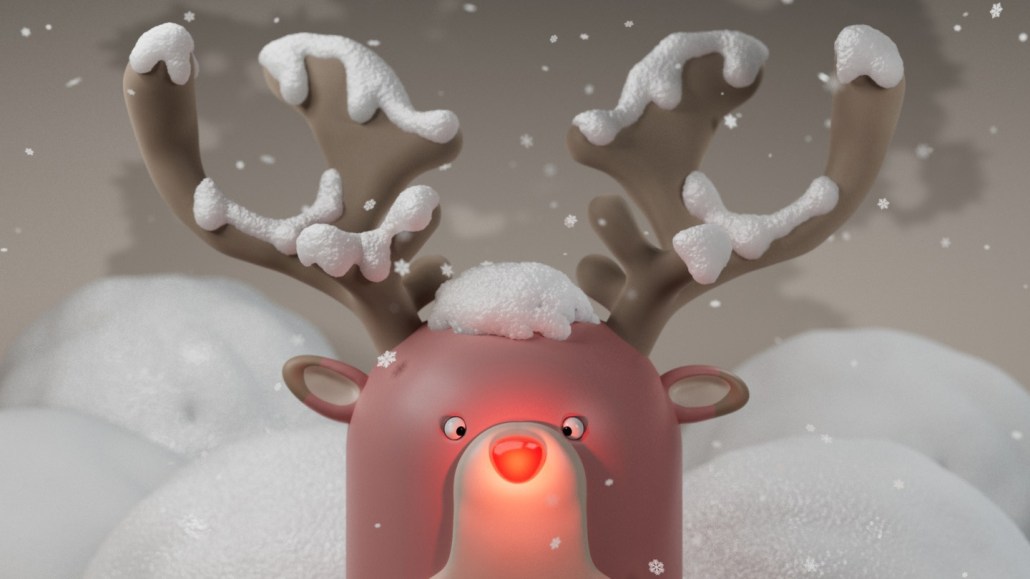
Rudolph’s bright snout might seem as fantastical as his ability to fly. But a light-up body part is actually possible, no holiday magic needed.
Mr. Kaplin
This time of year, “Rudolph the Red-Nosed Reindeer” is nearly inescapable. As the song goes, Rudolph is bullied for having a nose so bright it glows (like a lightbulb!). But one fateful Christmas Eve, his much-mocked nose makes Rudolph a hero. Using it as a beacon, Rudolph guides Santa’s flying sleigh through a foggy night to deliver gifts around the world.
Rudolph’s super-bright snout might seem as fantastical as his ability to fly. But a light-up body part needs no holiday magic. Many animals radiate a whole rainbow of colors through bioluminescence.
Given what we know about real animals that glow, a reindeer sporting a luminous nose would be unusual. Still, having a built-in red headlight would make a great adaptive trait for sleigh-pulling reindeer. Rudolph’s red nose just might look a little different to someone on the ground.
Nose light, nose bright
Most bioluminescent animals use the same simple chemical reaction to light up cells in their bodies. It takes only two main ingredients. The first is a compound called a luciferin. The other is an enzyme called a luciferase. “When oxygen is present in the cell, they react together and they give off light,” says Danielle DeLeo. This marine biologist studies bioluminescence at Florida International University in Miami.
Mixing and matching different luciferins and luciferases creates different colors. Bioluminescent reactions light up the eerie bluish-green lanterns that dangle from anglerfish. They give certain marine worms a purple shimmer. And they illuminate fireflies’ flashy backsides with a variety of colors.
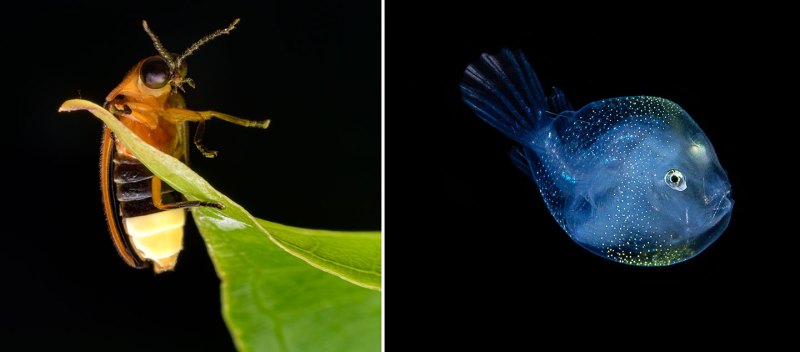
A lot of bioluminescence is near the blue end of the color spectrum. But some animals — such as fireflies, “railroad worm” beetles and some dragonfish — can glow red. Much like Rudolph, red-lit critters often do it to navigate dark and murky places.
Some deep-sea fish glow red, DeLeo says. Red light can’t travel far through seawater. But in the pitch black of the deep sea, “you can use that light to kind of see short distances,” she says. “Animals that might be a little bit further away from you aren’t going to pick up on that red light and then attack you.”
In foggy air, on the other hand, red light cuts through the gloom. Red has the longest wavelengths of any color we can see. With those longer wavelengths, it’s less likely to be scattered by water droplets in foggy air, says Nathaniel Dominy. “Blue light, green light, yellow light will scatter. Red light will travel far.” Dominy is an evolutionary biologist who studies mammal color vision. He works at Dartmouth College in Hanover, N.H.
If a sleigh-pulling reindeer were going to have a glowing nose, red would be the best color for it, says Dominy. “For Rudolph, that red light is going to allow them to navigate under foggy conditions more effectively than any other light.”
The odds of this trait evolving in reindeer, though, is “very, very low,” DeLeo says. Most bioluminescent animals are found in the ocean. And among the land animals that do glow, none are mammals. Still, it’s not impossible for bioluminescence to emerge in a new species. “It’s evolved at least 100 times across the tree of life,” DeLeo notes.
Rudolph the red-shifted reindeer
To someone on the ground who spied Rudolph flying, his nose might not look red at all. The reason is that when a light source is moving toward you, its light waves get squished and look bluer. When it’s moving away, its light waves get stretched out and appear redder.
“We don’t see that typically around us, because things have to travel really fast for the redshift or the blueshift,” says Laura Driessen. She’s a radio astronomer at the University of Sydney in Australia. Santa’s sleigh could be an exception. Driessen estimates that to visit every house in the world with kids who celebrate Christmas, Santa would have to tear through the sky at 8.2 million kilometers per hour (5 million miles per hour). That’s nearly 1 percent the speed of light.
Santa might have to move even faster to have enough time to sneak down chimneys, arrange gifts under trees and maybe enjoy some milk and cookies, Driessen says. Say Santa travels at 10 percent the speed of light. As Rudolph approaches a house, his nose would be blueshifted to look orange. As he flies away, his nose would redshift to nearly the deepest crimson human eyes can see — so dark it would look almost black.
Rudolph’s nose wouldn’t be the only thing blueshifted and redshifted, either. Blueshifted brown hues, for instance, would take on a greenish tinge. “We’d see a green sleigh and reindeer coming towards us. Then, for the brief moment that [Santa] has stopped and chucked the presents down our chimney, everything would look the normal color,” Driessen says. As they moved away, Santa and his reindeer would almost disappear as they went into infrared.
Such fast movement and a brightly glowing nose would cost Rudolph a lot of energy, Dominy notes. “I would want to make sure that he could get as much energy as possible. Sugary foods.” So anyone leaving out treats for Santa this Christmas Eve should be sure to leave out plenty of cookies for his reindeer, too.