combustion: (adj. combustible ) The process of burning.
debris: Scattered fragments, typically of trash or of something that has been destroyed. Space debris, for instance, includes the wreckage of defunct satellites and spacecraft.
engine: A machine designed to convert energy into useful mechanical motion. Sometimes an engine is called a motor.
fire: The burning of some fuel, creating a flame that releases light and heat. (in neuroscience) The activation of a nerve or neural pathway.
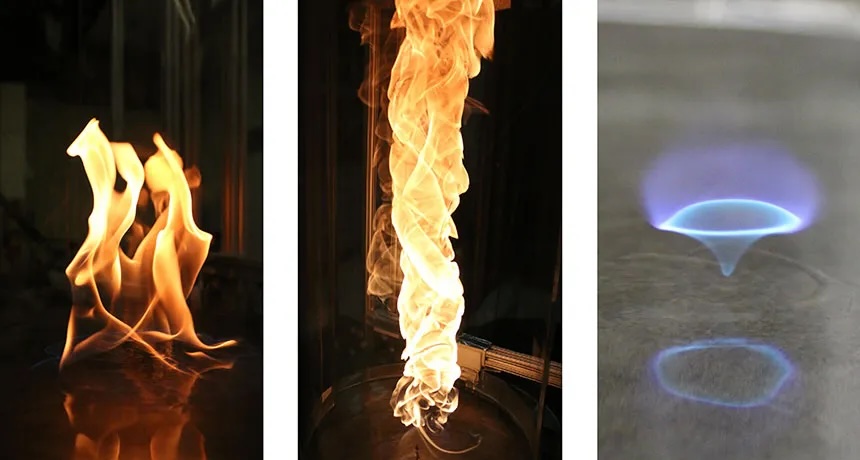
fire tornado: (also known as a firenado) A true tornado that can suddenly develop from conditions that accompany a wildfire. These cyclones stretch down from a rotating cloud base above. They are different from firewhirls — far smaller, twirling whirlwinds of fiery debris that often rise up from a blaze on the ground.
forest: An area of land covered mostly with trees and other woody plants.
fuel: Any material that will release energy during a controlled chemical or nuclear reaction. Fossil fuels (coal, natural gas and petroleum) are a common type that liberate their energy through chemical reactions that take place when heated (usually to the point of burning).
ignite: (in chemistry) To engage in the first step in combustion by getting some fuel (such as natural gas or gasoline) to heat enough to start burning. (in physics) To start a self-sustaining nuclear-fusion reaction, one that keeps releasing energy until engineers choose to shut the process down.
smoke: Plumes of microscopic particles that float in the air. They can be comprised of anything very small. But the best known types are pollutants created by the incomplete burning of oil, wood and other carbon-based materials.
soot: Also known as black carbon, it's the sometimes oily residues of incompletely burned materials, from plastics, leaves and wood to coal, oil and other fossil fuels. Soot particles can be quite small — nanometers in diameter. If inhaled, they can end up deep within the lung.
tornado: A violently rotating column of air extending from the ground to a thunderstorm above.
vaporize: To convert from a liquid to a gas (or vapor) through the application of heat.
vortex: (plural: vortices) A swirling whirlpool of some liquid or gas. Tornadoes are vortices, and so are the tornado-like swirls inside a glass of tea that’s been stirred with a spoon. Smoke rings are donut-shaped vortices.