Questions for ‘Save the sharks to save the ocean’
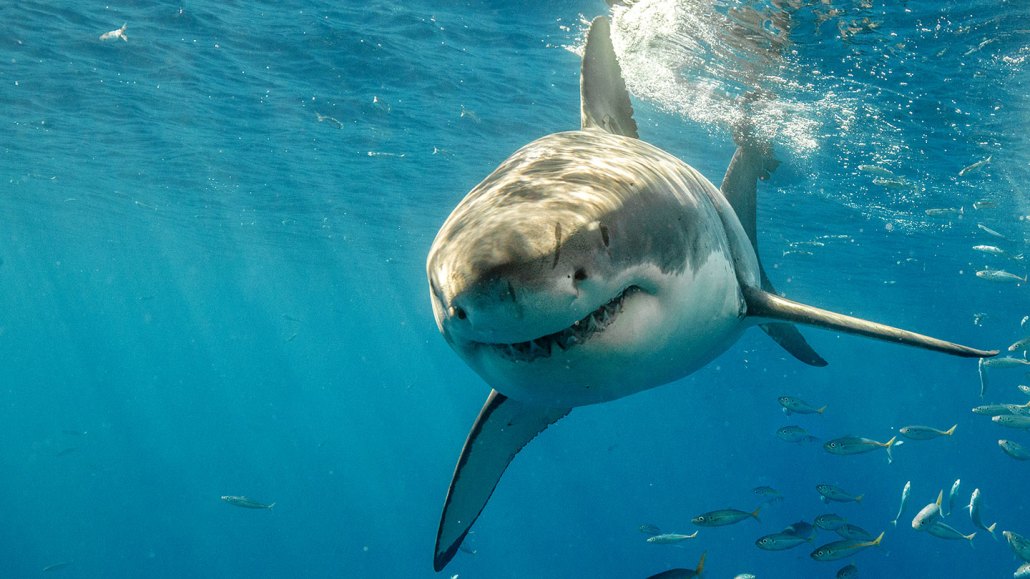
People often fear great white sharks due to their size, many sharp teeth and predatory nature, but humans are a far bigger threat to sharks than they are to us.
SHANE MYERS PHOTOGRAPHY/SHUTTERSTOCK
Share this:
- Share via email (Opens in new window) Email
- Click to share on Facebook (Opens in new window) Facebook
- Click to share on X (Opens in new window) X
- Click to share on Pinterest (Opens in new window) Pinterest
- Click to share on Reddit (Opens in new window) Reddit
- Share to Google Classroom (Opens in new window) Google Classroom
- Click to print (Opens in new window) Print
To accompany ‘Save the sharks to save the ocean’
SCIENCE
Before Reading:
- What feelings come up when you think about sharks? What feelings do you think may come up for other people when they think about sharks? If sharks were in peril, how do you think people’s feelings toward the animals would affect how strongly they would work to preserve them? Explain your answer.
- To what extent do you think sharks are important to the ocean ecosystem? What are some ways that sharks contribute to their ecosystem? If sharks vanished, what would be one potential negative consequence for their ecosystem? How might this affect humans?
During Reading:
- On average, how many people worldwide die from shark bites each year?
- How have shark populations changed since the 1970s? What has been the main reason for this change?
- How do the skeletons of Chondrichthyes fish, including sharks, differ from those of other fish?
- Explain how sharks affect the food web of an ecosystem. How might a shark influence a population of algae even if the shark doesn’t eat algae?
- This story describes sharks as having a “slow life cycle.” What does this mean? How does it affect how easily shark populations can adapt to changes in their environment?
- Describe two ways that cultures around the world use shark products.
- What is bycatch?
- What has happened to scalloped hammerheads near Mexico’s Isla Partida in the last 50 years?
- What year was the law banning shark fishing enacted in French Polynesia?
- What evidence suggests this law may be having positive impacts on sharks?
After Reading:
- To what extent are catch-and-release practices safe for aquatic species? Explain your answer using information from this story. Draw connections between this section of the story and your answer to Question 1 in Before Reading. How does the cultural perception of sharks in French Polynesia affect shark conservation efforts in that region? What are some other species — not necessarily aquatic — that might suffer similar public perception problems?
- Summarize the main point of this story in one sentence as though describing it to someone who has not read it. Describe how observations made by Paloma Aniló Calderón León support this point. Find an example of scientific data — such as measurements — that supports this point. To what extent has reading this story changed your perception of sharks and their value? Explain your answer.