Let’s learn about autumn leaves
The leaves of lots of trees change color and then fall in autumn. Here’s why
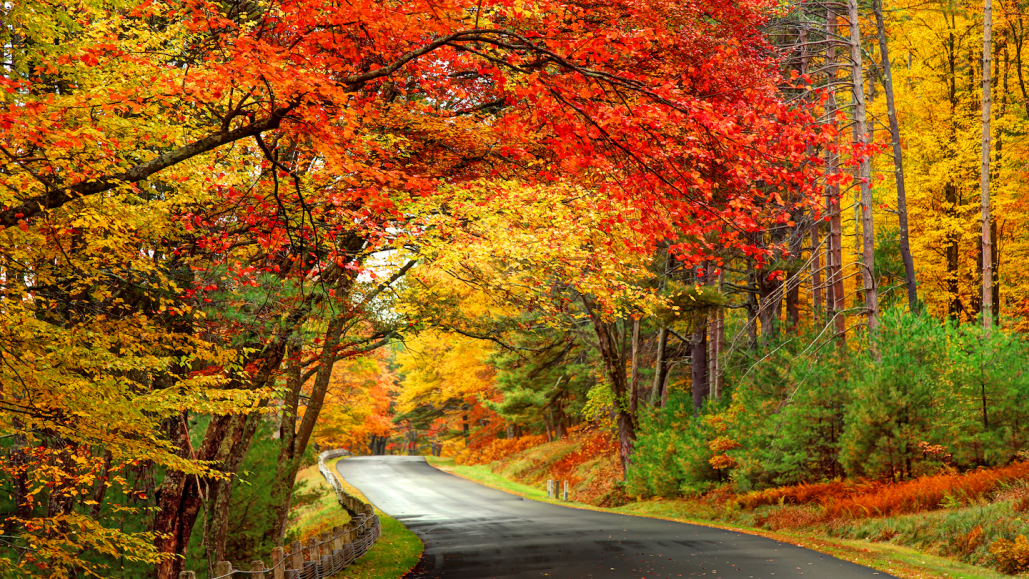
Some leaves put on a colorful show before falling to the ground and leaving their tree bare for the winter.
DenisTangneyJr/E+/Getty Images
Share this:
- Share via email (Opens in new window) Email
- Click to share on Facebook (Opens in new window) Facebook
- Click to share on X (Opens in new window) X
- Click to share on Pinterest (Opens in new window) Pinterest
- Click to share on Reddit (Opens in new window) Reddit
- Share to Google Classroom (Opens in new window) Google Classroom
- Click to print (Opens in new window) Print
For many trees, autumn is a spectacular grand finale. Their summer greenery gives way to a rich display of gold, crimson and even purple leaves. But those splashes of color are short-lived before leaves fall off their trees. Why do so many deciduous trees undergo this radical transformation? It’s all part of how the plants prepare for winter.
Trees spend much of the year turning sunshine into food through photosynthesis. This process relies on a green pigment in leaves called chlorophyll. But as winter approaches and days get shorter, many trees switch to using stored energy. They stop making as much chlorophyll. This allows yellow, orange and red pigments in their leaves to shine through.
At the same time, these trees stop putting effort into holding on to their leaves. Shedding their leaves can help trees conserve moisture in their trunks over winter. It also allows harsh winds to blow more easily through trees’ branches, putting less strain on them.
Bacteria, fungi and other decomposers feast on fallen leaves. By spring, they’ve transformed the dead plant matter into rich soil that supports new plant growth.
Not all trees let go of their autumn leaves so easily. Oaks, some willows and other “marcescent” plants may cling to their leaves all winter. This can help shield their branches from hungry animals. Conifer trees likewise keep their needles year-round. Needles can withstand the cold more easily than leaves do. So it costs conifers less energy to hang on to their needles than to shed and regrow them annually.
Trees that do lose their leaves may look similar once they’re all bare, even when they belong to different species. But it is possible to tell them apart. Clues to identifying a tree’s species can be found on its branches, buds and bark.
Have a close look at the trees outside your own window when the leaves change in autumn and fall to the ground. (We’ve got some tips linked in our Activities section below.) By collecting data on your local biodiversity, you can contribute to citizen science projects. Plus, spending time with nature can boost your mood — something many of us need as the days grow darker and colder.
Want to know more? We’ve got some stories to get you started:
Uncover leaves’ hidden colors in this science activity Let’s separate the different pigments lurking in brightly colored autumn tree leaves. (9/2/2025) Readability: 7.8
Explainer: How to identify tree species in the winter Identifying trees without their characteristic leaves is difficult, but not impossible. Here’s how you can use other clues to ID the trees you see this winter. (1/6/2025) Readability: 6.1
There’s life beneath the snow — but it’s at risk of melting away During the winter, subnivium decomposers transform leaf litter into rich soil. This is just one of the important ways under-the-snow organisms shape their ecosystems. (1/16/2025) Readability: 7.2
Explore more
Explainer: How photosynthesis works
A teen turns an autumn chore into a science project
Spending time in green spaces can provide big health benefits
Activities
Want to see for yourself why leaves change color in the fall? Collect colorful leaves from your neighborhood and extract their pigments in this experiment from Science Buddies.
Are the trees near you already bare? See if you can ID your local trees using other clues. We have some tips for beginner plant detectives in the “Getting Started” section of this explainer.