Animals
- Animals
Rhinos, camels and bone-crushing dogs once roamed Nebraska
Scientists digging into the remnants of an ancient watering hole in Nebraska discovered evidence of an Africa-like savanna, complete with rhinos.
- Animals
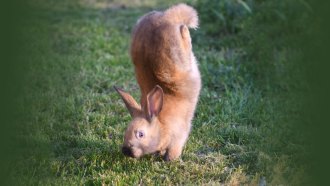
These rabbits can’t hop. A gene defect makes them do handstands
Mutations in a gene that helps nerve cells work properly rob rabbits of their ability to hop. Instead, the animals use their front paws to move.
- Animals
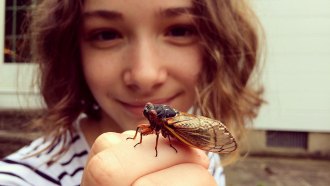
Explainer: What are cicadas?
There are more than 3,000 species of cicadas, but the best known in North America are periodical cicadas, which emerge every 13 or 17 years.
- Animals
How bees play telephone to form a swarm
Honeybees use pheromones and flapping wings to tell each other where to find the queen — so they can all be together. Learn more with this web comic.
- Animals
Scientists Say: Genus
A genus is a group of closely related species. It’s the first part of the two-part system called binomial nomenclature, used to name living things.
- Animals
Let’s learn about dogs
From learning the names of their toys to sniffing out viruses in human sweat, dogs are far more than household pets.
- Animals
Scientists Say: Dinosaur
Dinosaurs emerged between 243 and 233 million years ago. While some died out 66 million years ago, others are still with us — birds.
- Animals
Science and Indigenous history team up to help spirit bears
When scientists and Indigenous people work together, their efforts can benefit bears and people.
- Animals
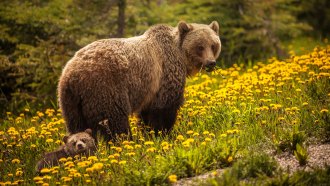
Explainer: Black bear or brown bear?
If you see a bear, check size, shape and more to find out what type it is.
- Animals
Changing people’s behavior can make bear life better
Black bears don’t always live life on the wild side. More and more, they live near people. Here’s how people and bears can get along.
- Animals
Analyze This: Cows burp less methane after early-life treatment
Calves that receive the 14-week treatment belch less of the greenhouse gas, possibly due to shifts in their gut microbes.
- Animals
Urban gardens create a buffet for bees
City gardens provide a huge amount of nectar and pollen for pollinators, making them an essential conservation tool.