Analyze This!
Exploring science through data, graphs, visualizations and more.
- Earth
Analyze This: Why do atmospheric ‘ghosts’ glow green after red sprites?
Green ghosts — blurs of light that sometimes follow lightning — get their color from oxygen and metals in space dust.
- Planets
Analyze This: Jupiter’s Great Red Spot is shrinking
If the windstorm keeps dwindling, the Great Red Spot could someday disappear — like an earlier spot observed in the 1600s.
- Archaeology
Analyze This: Human brains can last thousands of years
Ancient brains may not be rare finds. An analysis of over 4,000 preserved human brains reveals five processes that protect against decay.
- Earth
Analyze This: Where are U.S. earthquakes most likely?
A model used data on historical quakes and measurements from active faults to forecast risks of damaging earthquakes in the next 100 years.
- Space
Analyze This: A recently spotted space object is puzzling scientists
A pulsar’s invisible partner could be an oddly heavy neutron star or a very light black hole.
- Animals
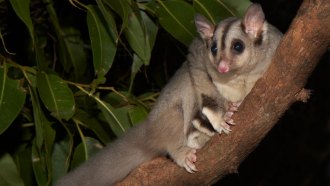
Analyze This: Marsupial gliders may avoid the ground to dodge predators
It has been unclear why gliding evolved in marsupials. To search for clues, researchers strapped activity trackers to some of these cryptic creatures.
- Oceans
Analyze This: Climate change may worsen the spread of ocean noise
Some parts of the ocean may become five times as loud in the future.
- Archaeology
Analyze This: Stonehenge’s ‘Altar Stone’ has mysterious origins
After a century of searching for the source of the Altar Stone, scientists have yet to figure out where ancient people got the rock.
- Planets
Analyze This: Neptune’s cloud cover syncs up with the solar cycle
Telescope observations hint how sunlight-driven chemistry may boost cloud cover on our solar system’s farthest planet.
- Earth
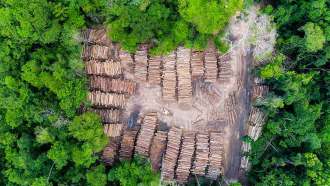
Analyze This: Tropical forests have gotten patchier
Although many of the world's forests have gotten less fragmented since 2000, tropical forests have gotten more chopped up, putting animals at risk.
- Animals
Analyze This: White wing spots may help monarch butterflies fly far
Monarchs with more white on their wings are more successful migrants, new research shows
- Materials Science
Analyze This: A new fabric mimics polar bears’ pelts for warmth
With layers that work like polar bears’ skin and fur, a material absorbs light and keeps it from escaping.